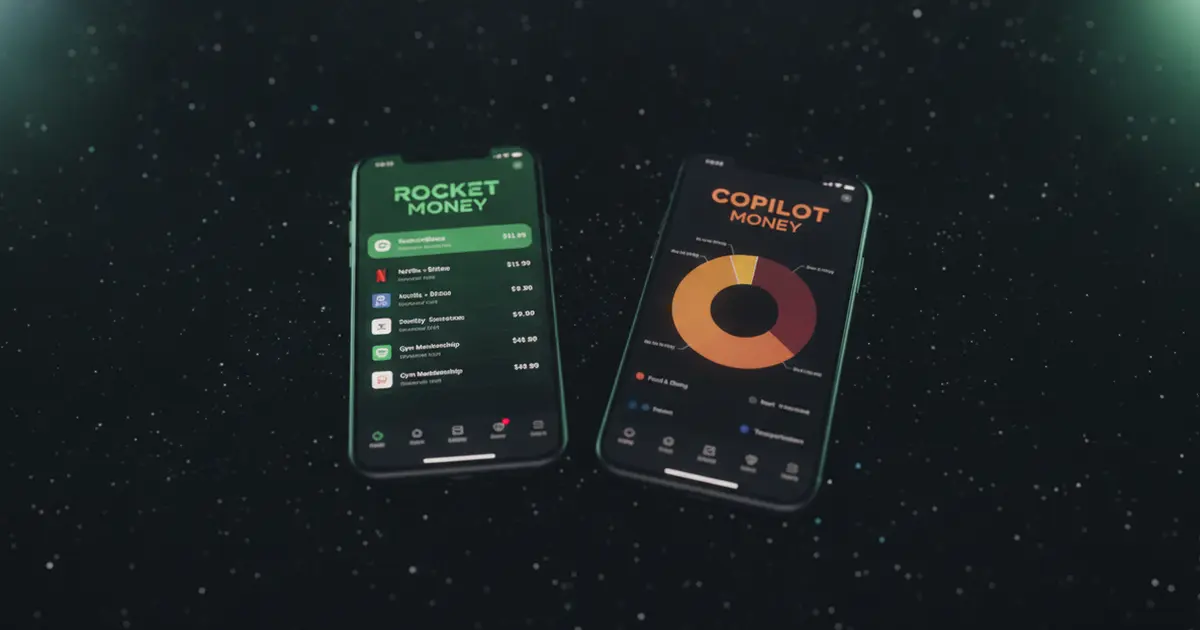
Rocket Money has more than 3.5 million users who’ve linked their bank accounts to track subscriptions and monitor spending. Most people set it up in five minutes without thinking twice. But for a growing number of users, the bank-linking step is exactly where they stop and ask: is Rocket Money actually safe? It’s a fair question. Connecting Plaid to your checking account is a real decision with real trade-offs. This review covers how Rocket Money’s security works, what the company does with your data once you’re inside the system, and when that bank-link trade-off is and isn’t worth making. For a full breakdown of features and pricing, see our Rocket Money review.
Rocket Money is generally safe. It connects through Plaid with AES-256 encrypted, read-only bank access and can’t move or transfer your money. Rocket Companies has an A+ BBB rating with no reported data breaches as of 2026. The catch: on banks without OAuth, Plaid stores your credentials in its own encrypted vault rather than your bank’s servers.
How Rocket Money Keeps Your Bank Account Safe
Rocket Money doesn’t store your bank username or password. The connection runs through Plaid, a financial data infrastructure company also used by PayPal, Venmo, Robinhood, and Coinbase.
Rocket Money routes its bank connection through Plaid, a financial data aggregator serving 11,000+ financial institutions and used by over 8,000 apps. Plaid holds SOC 2 Type II certification, the same compliance standard applied to enterprise cloud providers, and uses AES-256 encryption for data at rest and in transit. If your bank supports OAuth (Chase, Bank of America, Wells Fargo, and most major credit unions do), Plaid redirects you to your bank’s own login page. You authenticate directly on your bank’s servers, which then issue Plaid a scoped, read-only token. Your credentials never touch Plaid’s or Rocket Money’s infrastructure. On banks without OAuth support, Plaid collects your credentials, encrypts them, and stores them in its own vault, passing only a read-only access token to Rocket Money. Either way, the access is strictly read-only: Rocket Money sees transaction history, account balances, and institution name. It can’t initiate transfers, pay bills, or move your money in any direction.
That last point is the most important one. Even if someone compromised Rocket Money’s servers, they’d get transaction records. They couldn’t drain your account. Read-only is the primary safety guardrail built into the entire system.
Rocket Money also supports multi-factor authentication and requires HTTPS on all connections. If you’re setting up the app, enabling MFA is worth the 30 seconds it takes. It closes the most common attack vector: someone getting into your Rocket Money account with a reused or stolen password.
One thing MFA doesn’t protect against is Plaid credential storage on non-OAuth banks. Plaid has no reported breaches of its own, but if that specific scenario concerns you, it’s worth checking whether your bank supports OAuth before you connect. You can check at plaid.com/connections.
Is Rocket Money Legit? Background and Track Record
Rocket Money started as Truebill, founded in 2015. Rocket Companies acquired it in 2022 for $1.275 billion and rebranded it. That acquisition matters for credibility. Rocket Companies also runs Rocket Mortgage and Rocket Loans. At that scale, the company has compliance teams, regular security audits, and legal accountability that a small startup doesn’t carry.
The app holds an A+ rating from the Better Business Bureau and is BBB-accredited. App Store and Google Play ratings sit at 4.5 and 4.6 stars respectively, strong marks for a finance app across 400,000+ combined reviews. Trustpilot is more divided at 3.3 out of 5. The most common complaints there aren’t about security or fraud. They’re about unexpected Premium charges after free trials and the confusing sliding-scale pricing where you choose your own monthly fee between $6 and $12. Those are legitimate criticisms of how the business is structured, but they don’t signal a scam.
No data breaches involving Rocket Money or its predecessor Truebill have been publicly reported as of mid-2026. For an app handling sensitive financial data since 2015, that’s a decade-long clean record.
Calling Rocket Money a scam would be inaccurate. The concerns worth paying attention to are in the privacy policy, not the security infrastructure.
What Rocket Money Actually Does with Your Financial Data
Security and privacy are different questions. “Is it encrypted?” is a security question. “What does the company do with what it can read?” is a privacy question. Rocket Money does well on the first and deserves more scrutiny on the second.
According to Rocket Money’s privacy policy, they don’t sell personally identifiable information to third parties for advertising. They do share aggregated, de-identified data with research and analytics partners. That’s standard practice for fintech apps.
Two practices are worth understanding before you sign up:
First, Rocket Money may use your financial profile to surface product offers from Rocket Companies. If your transaction history shows mortgage-sized rent payments, you might see a Rocket Mortgage offer. If you’re carrying high-interest debt, a Rocket Loans suggestion could appear. Both are revenue mechanisms for Rocket Companies, and the app’s free tier is partly subsidized by them.
Second, if you use the bill negotiation service, a third-party negotiation team receives access to relevant account data to work on your behalf. This is disclosed in the terms of service, but it’s easy to miss during the quick signup flow.
If you stick to the free tier for basic subscription tracking, your data footprint stays relatively contained. The more Rocket Money features you engage with, the more parties touch your data. That’s not unique to Rocket Money, but it’s worth knowing upfront.
One more note on the free trial: Rocket Money offers a 7-day Premium trial that requires payment info upfront. If you don’t cancel before day 7, it converts to a paid subscription at your chosen price point between $6 and $12 per month. This practice is exactly what a subscription tracker should warn users about. The Trustpilot complaints about unexpected charges usually trace back to this moment.
Is Rocket Money Safe Without a Bank Login?
Some users want to track subscriptions without the bank link. Rocket Money isn’t designed for this. Most of its useful features (automatic subscription detection, categorization, and the Premium cancellation concierge) depend on live Plaid access. You can technically add subscriptions manually inside the app, but the automated detection that makes Rocket Money worth using only works with a connected account.
For users who want to avoid bank linking entirely, there are subscription trackers built around a no-login model. Ditchr, for example, lets you build a complete subscription list from manual entry, screenshots, email receipts, or an uploaded bank statement. Your live banking credentials never enter the picture. The app shows your full monthly and yearly spend, sends renewal and free-trial reminders before charges hit, and lets you search a catalog of known services to add them in seconds. It’s free, and it works across iOS and Android.
The honest trade-off: Rocket Money’s automated detection catches subscriptions faster and more completely than manual tracking, especially if you’re not already sure what you’re subscribed to. If you genuinely can’t remember what’s billing you each month, Plaid integration finds things manual entry misses. But if you have a reasonable sense of your subscriptions and you’d rather control exactly what data an app can see, a no-login tracker gets you the oversight without the access.
For most users who go in with clear expectations, Rocket Money is a capable app with solid security infrastructure. The encryption and read-only access are real. The remaining question is whether you’re comfortable with the data footprint that comes with using a financial services company that also sells mortgages and loans.
Comparing Rocket Money’s Security to Manual Subscription Tracking
Rocket Money’s standout features over basic trackers are automated detection and the Premium cancellation concierge, where Rocket Money contacts the provider and cancels on your behalf. Both require the Plaid link, and the concierge requires the $6 to $12 monthly Premium fee.
For users who want free subscription tracking with no bank credentials involved, the feature set shifts. Apps like Ditchr handle tracking through manual entry and import tools, fire renewal and free-trial reminders before charges process, and display a full spend dashboard. The “Run a Sweep” feature pulls subscriptions from screenshots, email receipts, or statement uploads. You see what you’re paying and get warned before renewals happen, without any app holding read-only access to your live accounts. For step-by-step guidance on canceling subscriptions directly through your device rather than through an app, the Android subscription cancellation guide is a useful companion.
Whether Rocket Money’s approach makes sense for your situation comes down to one question: do you value the automated detection and concierge cancellation enough to trade Plaid access for it?
If the bank link makes you comfortable and the automation is useful, Rocket Money is a well-built option. If keeping your banking credentials out of third-party apps matters more, there are trackers designed for exactly that.
If tracking subscriptions without any bank login sounds like the right fit, Ditchr handles it from screenshots, statement imports, and email receipts. Free, private, no bank access required. Download Ditchr and run a sweep to see what’s quietly charging you each month.