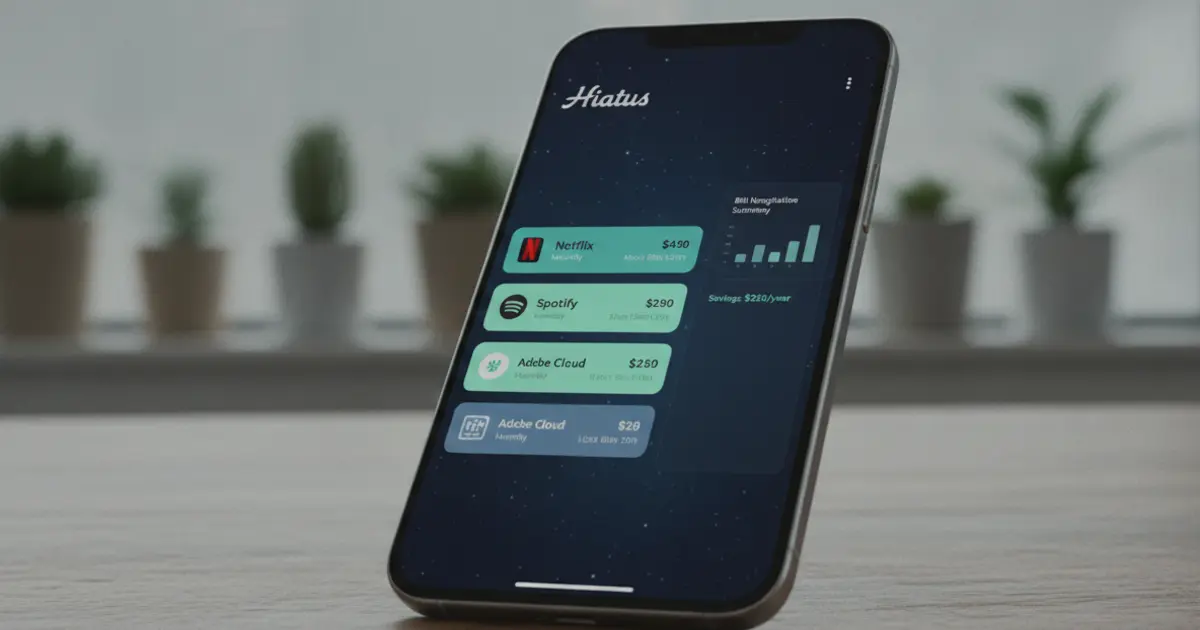
Hiatus markets itself as a bill negotiation app that also tracks subscriptions. The pitch is simple: connect your bank account, let the app surface recurring charges, then pay for a concierge team that pushes down your cable, phone, and internet bills. For users tired of watching recurring costs creep up year after year without ever calling anyone to fight back, that combination sounds useful.
Whether it’s worth paying for depends on what you actually need and how comfortable you are linking a bank account to a third-party service. This review covers what the Hiatus app does, what it costs, how it handles your financial data, and which kind of user it fits. Full disclosure: we built Ditchr, a competing subscription tracker, so you’ll see exactly where the apps overlap and where they go in different directions.
Hiatus is a subscription tracker and bill negotiation app for iOS, Android, and web. The free tier auto-detects recurring charges by linking your bank via Plaid. Premium ($9.99/month or $35.99/year) adds a concierge that cancels subscriptions and negotiates phone, internet, and cable bills for you. It’s US-only and holds a 4.6/5 App Store rating.
What Is the Hiatus App?
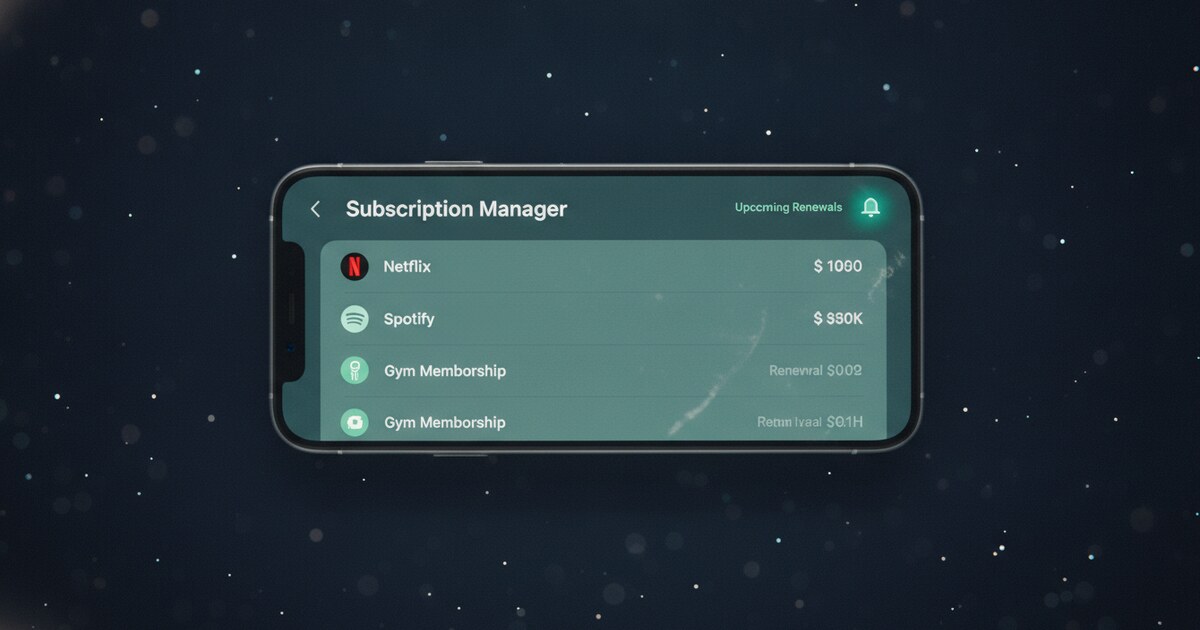
Hiatus runs on two layers. The tracking layer connects to your bank accounts and credit cards through Plaid, scans your transaction history, and identifies recurring charges automatically. Everything lands in a dashboard showing your total monthly and annual spend by service and category.
The negotiation layer is what sets Hiatus apart. Pay for Premium, and a concierge team contacts your service providers directly. They push for lower rates on phone plans, cable, internet, insurance, and utility bills. Hiatus charges a flat monthly fee for this service regardless of how much they save you, which puts their incentives roughly in line with yours.
Hiatus operates as a subscription management and bill negotiation service available on iOS, Android, and web. The app connects to bank accounts and credit cards through Plaid, a read-only financial data aggregator used across thousands of financial apps. Plaid doesn’t give Hiatus direct access to your bank login credentials or the ability to move money. The free tier scans transaction data to identify recurring subscriptions and bills, then displays them in a single dashboard with total monthly and annual spend. The Premium plan, priced at $9.99 per month or $35.99 per year, adds a concierge team that contacts service providers to negotiate lower rates on cable, phone, internet, insurance, and utility bills. Hiatus charges a flat monthly fee rather than taking a percentage of savings, which makes the cost predictable month to month. The app holds a 4.6 out of 5 rating in the Apple App Store and is available only to users in the United States.
Hiatus App Features
Free tier
The free plan isn’t a stripped teaser. It connects to your bank and cards, auto-detects subscriptions and recurring charges, and shows your total monthly spend in one view. Individual charges appear by service name and amount, and you can see how your costs compare month-to-month.
Spending insights on the free tier show which categories you’re spending most in and flag charges that have increased since last month. For someone who wants automatic discovery without paying anything, that’s a functional product on its own.
What’s locked behind Premium: any concierge action. Hiatus can show you that your Comcast bill is $89/month. It won’t call to negotiate it lower until you upgrade.
Premium tier
Premium is where the bill negotiation reputation earns its keep. Flag a bill for negotiation, and the concierge team contacts the service provider, pushes for a lower rate, and reports back on what they secured. They cover phone plans, cable, internet, insurance, and utility bills.
Concierge cancellations work the same way. Instead of navigating a company’s cancellation flow yourself, you submit the request through Hiatus and the team handles the outreach. For services with notoriously difficult cancellations (cable companies, gyms, or insurance providers that route you through retention specialists), having someone else make that call has real value.
One honest note: concierge actions take time. Users have reported waiting several days for results. If a charge is hitting your card in 24 hours and you need it cancelled, the timeline may not work. Hiatus is best used with lead time, not as a last-minute cancellation tool.
Hiatus Pricing: Free vs. Premium
| Plan | Cost | What’s Included |
|---|
| Free | $0 | Auto-detection, dashboard, spending insights |
| Premium Monthly | $9.99/month | Free features + concierge cancellations + bill negotiation |
| Premium Annual | $35.99/year (~$3/month) | Same as Premium Monthly, billed once |
The annual plan at $35.99 works out to about $3 per month. If the concierge saves you even $5 on one cable or phone bill, the plan breaks even. Hiatus also offers a “choose your own” pricing option for Premium, with users reporting options starting lower than the listed monthly rate.
The flat-fee structure is a genuinely good design choice. Rocket Money, the closest comparable service, takes a percentage cut of whatever they save you on bill negotiation. Hiatus charges the same monthly rate regardless, so your savings stay yours entirely.
Is Hiatus Safe?
Hiatus uses Plaid to connect to your bank and card accounts. Plaid is a read-only financial data aggregator. It can view your transaction history but can’t initiate payments, move money, or change anything in your accounts. Your bank login credentials go to Plaid directly, not to Hiatus.
On top of the Plaid connection, Hiatus applies 256-bit SSL encryption to data in transit. That’s the same standard used by most banking apps and large financial platforms.
The practical security question isn’t whether Hiatus can take money from your account. It can’t, given the read-only structure. The real question is whether you’re comfortable with a third party reading your full transaction history, which covers all purchases, not just subscription charges. Hiatus’s privacy policy governs what happens with that broader data beyond the subscription tracking function.
If you don’t want any app reading your transaction history through Plaid, Hiatus doesn’t offer a workaround. The auto-detection requires the bank link. There’s no manual-only path.
Hiatus App Pros and Cons
Pros
- Automatic subscription detection via Plaid (catches charges you’ve forgotten)
- Bill negotiation concierge included with Premium
- Flat monthly fee, not a percentage of savings
- Available on iOS, Android, and web
- 4.6/5 App Store rating
- Premium concierge handles cancellations for you
Cons
- Bank linking via Plaid is required (no manual-only option)
- Concierge cancellations and negotiations take several days
- US only
- Premium required for the features that make Hiatus distinct from free alternatives
- Bill negotiation limited to eligible service types (cable, phone, internet, insurance, utilities)
- No dedicated free-trial countdown reminders
Who Should Use the Hiatus App?
Hiatus is a strong fit for someone who wants to reduce their monthly bills without making the phone calls themselves. If you pay separately for cable, phone, and internet and haven’t renegotiated any of those in over a year, the concierge has clear targets and a flat monthly fee that pays for itself quickly.
It also makes sense if you want automatic subscription discovery and don’t mind the Plaid connection. The free tier surfaces forgotten recurring charges without requiring you to build a list by hand.
Hiatus is probably the wrong fit if:
- You don’t want any app connected to your bank account via Plaid
- You need a cancellation handled within 24-48 hours
- You’re outside the United States
- Your main goal is tracking free-trial end dates before they convert to paid charges
Hiatus vs. Other Subscription Trackers
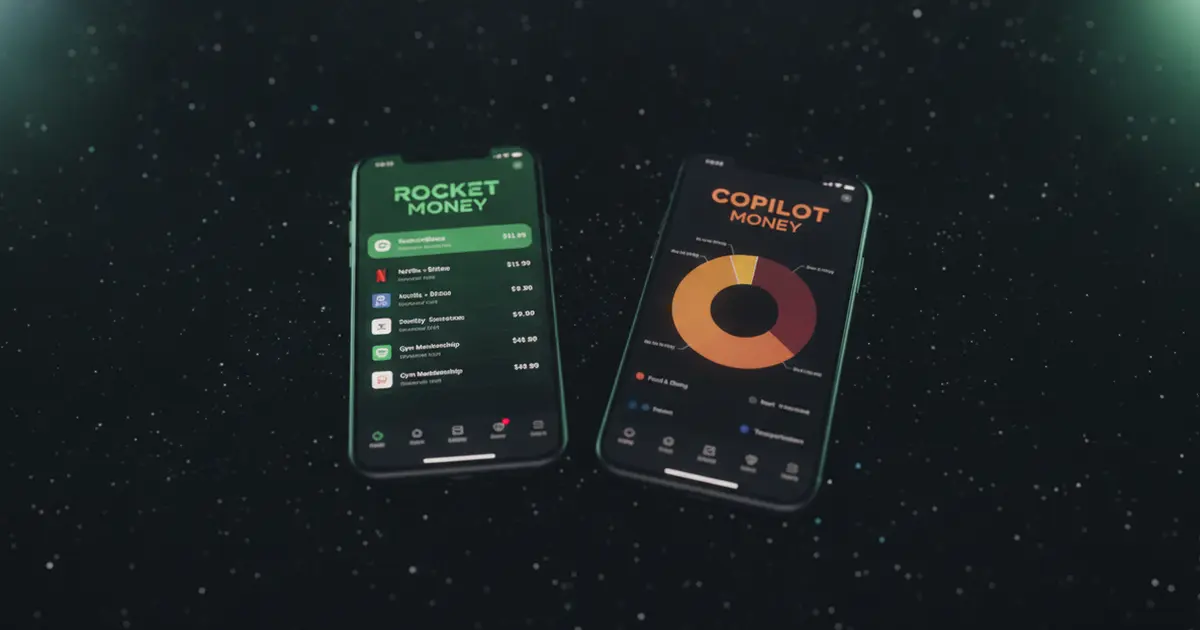
Hiatus competes most directly with Rocket Money. Both use Plaid for automatic detection and both offer a concierge that handles cancellations. The key differences: Rocket Money charges $6-$12 per month and takes a percentage cut of negotiated bill savings; Hiatus charges a flat $9.99 per month and keeps your savings whole. Rocket Money also adds budgeting, credit score monitoring, and net worth tracking that Hiatus doesn’t include. Our Rocket Money review covers how that deeper feature set plays out in practice.
On the other end of the spectrum is Bobby, which requires no bank linking and charges a one-time in-app purchase instead of a monthly fee. Bobby works entirely through manual entry with no auto-detection, no concierge, and no bill negotiation. Our Bobby app review covers the manual-only model for people who want it. For a broader side-by-side of the main options in this category, our Rocket Money alternatives breakdown compares several trackers across privacy, pricing, and features.
Ditchr, which we built, sits in a different position from all three. No bank linking, no Plaid, no concierge, and no bill negotiation. The focus is subscription tracking with free-trial countdown reminders (a feature Hiatus doesn’t specialize in), a sweep import that lets you upload a bank statement screenshot or email receipts to surface forgotten charges without a live bank connection, cancel guidance that points you to the right page for each specific service, and an AI assistant called Nova. If the reason you’re looking at Hiatus is subscription tracking without handing over bank access, Ditchr covers that job for free.
If you want bill negotiation and automatic detection and you’re comfortable with Plaid connectivity, Hiatus Premium is worth testing at $35.99/year. If subscription tracking without a bank connection is the priority, or if free-trial reminders are what you actually need, Ditchr covers both for free.